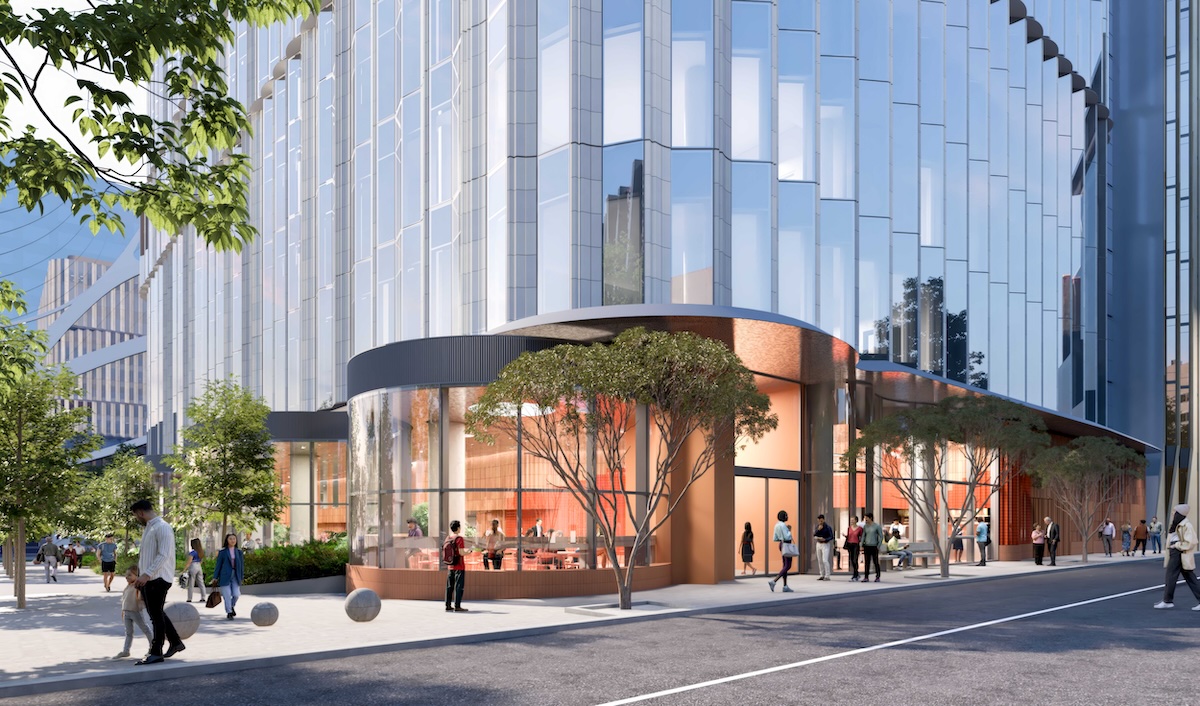
The Australian Institute for Infectious Disease (AIID) aims to embed best-practice social and sustainability initiatives at every stage of the project including design, construction, and the long-term operation of the building.
AIID facility design has been assessed and is on track to receive a 5 Star Green Star rating, representing Australian excellence in better, healthier and more responsible buildings.
This rating reflects the AIID Foundation Partners’ commitment to creating a facility that supports world leading infectious disease research while minimising environmental impact and enhancing the wellbeing of staff, researchers and the broader community.
The Green Star certification assesses buildings across key categories including energy, water, materials, health and wellbeing, transport, and innovation. The AIID’s 5 Star design rating recognises strong performance across each of these areas, positioning the facility among the leading examples of sustainable infrastructure in Australia.
Notably, the AIID design achieved credits in the clean air category, which evaluates ventilation systems and the provision of outdoor air. This is a critical focus for many AIID researchers, as improved air quality helps reduce the risk of infectious disease transmission as well as other airborne hazards such as bushfire smoke, allergens, pollution and mould.
Kane Constructions committed to diverting at least 90 per cent of demolition materials generated by early works from landfill by recovering and repurposing resources wherever possible. This included scrap metal and concrete rubble, which was processed into new materials such as low‑carbon concrete and road base. The target was met and exceeded with 97 per cent of material being diverted from landfill.

The AIID is a five-star Green Star project which requires all water used for demolition (primarily dust suppression) to be sourced entirely from reclaimed or recycled water. The AIID site required approximately 19,000 litres of water per day, presenting a challenge during a period of rainfall shortages.
To address this, a creative solution was developed. The University of Melbourne’s Parkville campus is built over the former Bouverie Creek, which continues to flow underground and is collected at several points across campus. The AIID project installed a new water connection point, enabling tankers to collect this water and transport it to the construction site. This ensured no potable drinking water was wasted during the early works phase.
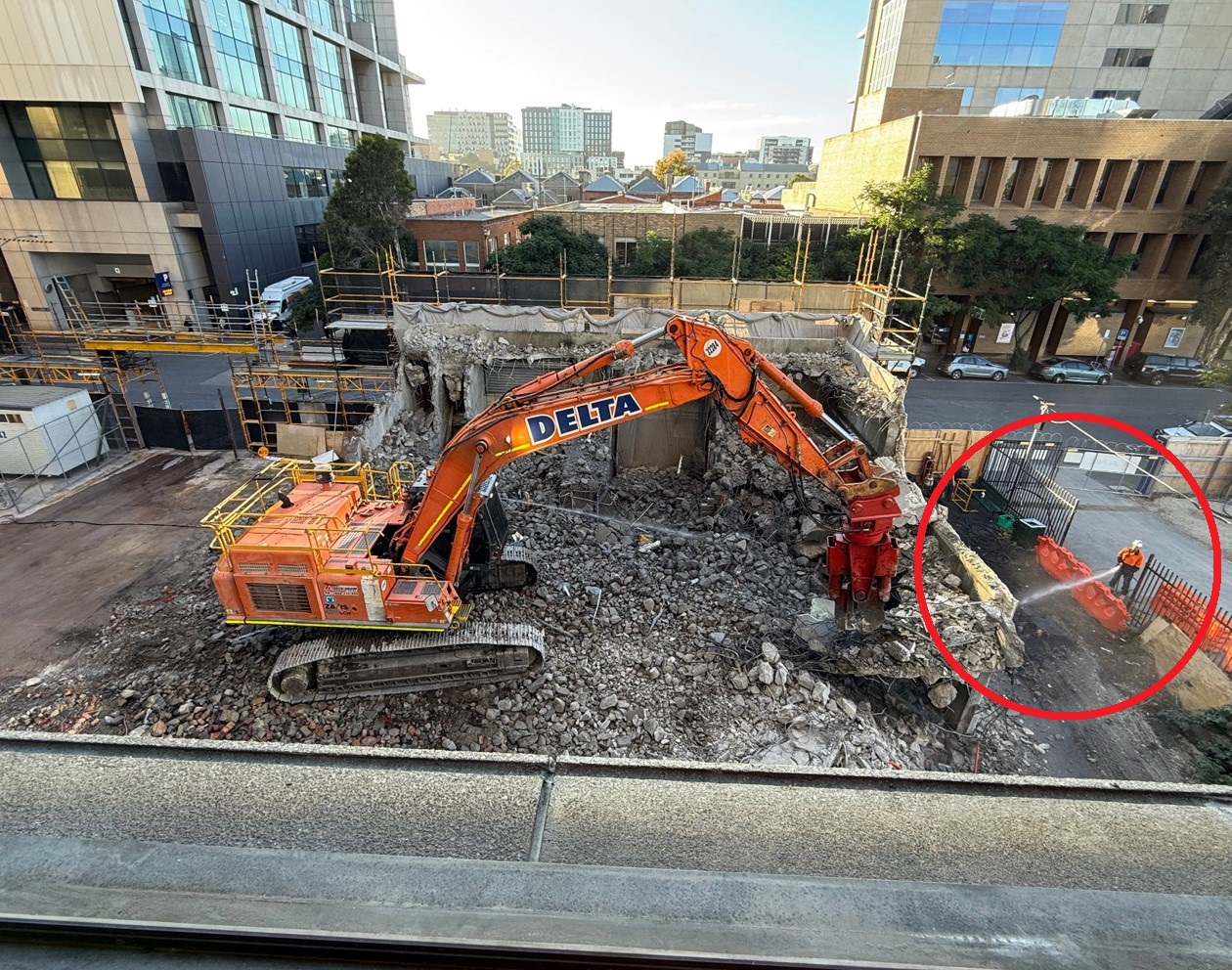
To enable delivery of the AIID building, several existing buildings were stripped and demolished to prepare the development site. Recognising that demolition can generate significant carbon emissions, waste, dust and noise, the project team identified opportunities to minimise environmental impact through sustainable construction and business practices and increasing social outcomes through delivery. These included the integration of sustainability and social procurement targets within the contractor’s scope.
Prior to engaging the market, the project team identified more than 80 tonnes of furniture, fittings and equipment that could be repurposed across other University of Melbourne properties to maximise diversion from landfill. This included student accommodation items such as beds, air conditioners and furnishings, which were relocated to the University’s Dookie student accommodation project.
Early works contractor Kane Constructions committed to a social procurement target of at least two per cent of the total contract value being allocated to groups underrepresented in the construction industry. Kane ultimately achieved an increased target of five per cent. Contributing to this result was Kane’s engagement of Project Net Zero, a 100 per cent Indigenous-owned business with a workforce comprising more than 80 per cent Indigenous employees. Project Net Zero was engaged to strip out and donate an additional 30 tonnes of furniture and equipment, beyond that salvaged from the existing buildings by the University of Melbourne.
View this post on Instagram