Antimicrobial resistance poses a significant global threat to public health, food security, and economic stability. As microorganisms develop resistance to antimicrobial drugs, common infections become increasingly difficult to treat, affecting both human and animal populations.
This is the challenge that researchers from Australian Institute for Infectious Disease (AIID) Foundation Partners, the University of Melbourne, Burnet and Doherty Institute, addressed at a recent staff seminar on the theme of Antimicrobial Resistance: Innovation, Stewardship and Surveillance.
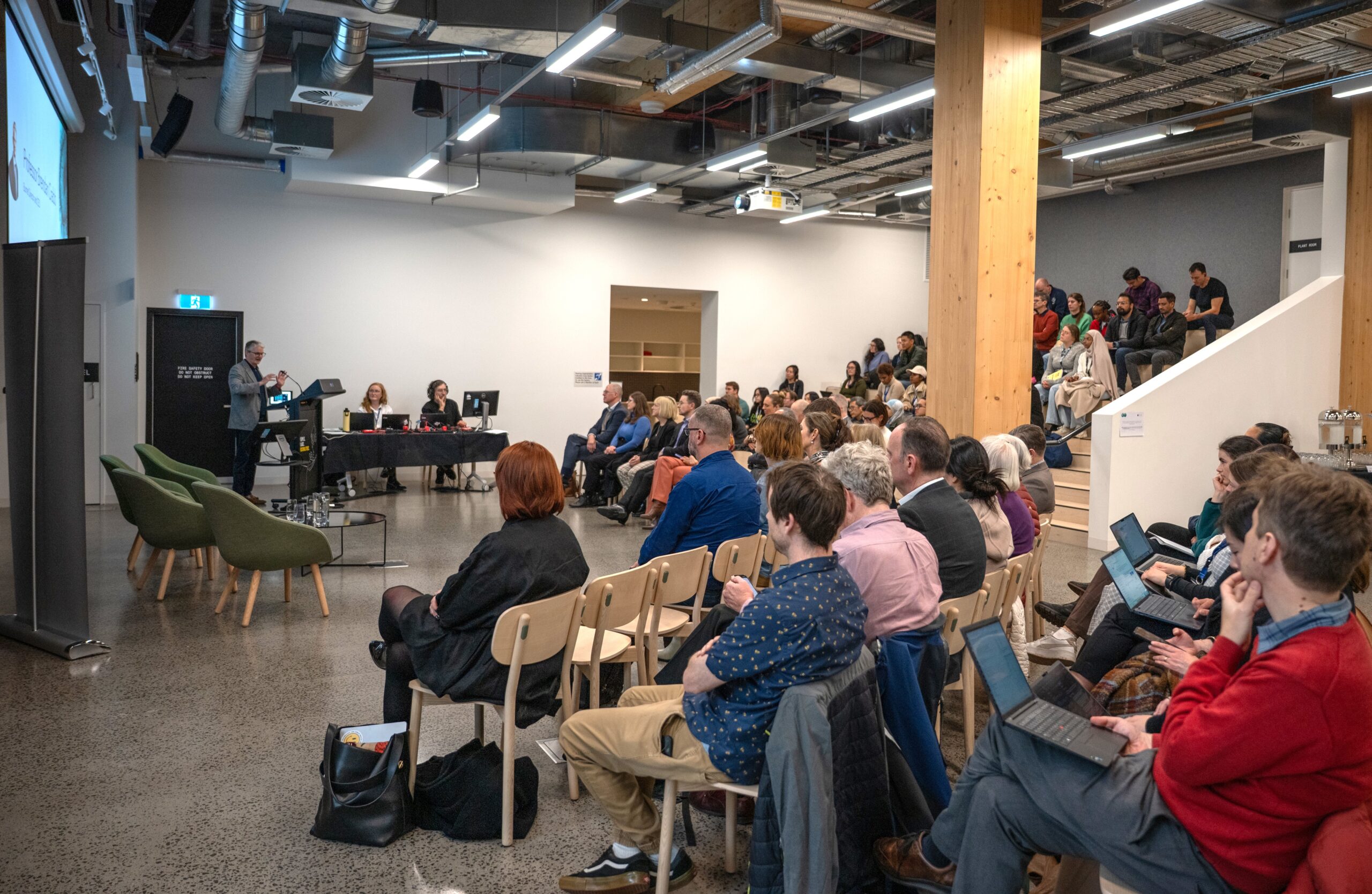
This latest event in the AIID in Action seminar series was held at the University of Melbourne’s Melbourne Connect, featuring three expert presentations, followed by a panel discussion and Q&A.
A/Prof Sacha Pidot from the Doherty Institute presented on “Turning foes into friends: antibiotic discovery from human pathogenic bacteria”, explaining that the majority of clinically-used antibiotics in the past 50–60 years have come from the soil microbiome, but it’s becoming harder to find new compounds. Sacha spoke about how his lab is exploring new organisms, specifically, Nocardia and their ability to produce new antibiotics.
A/Prof Penelope Bryant from the University of Melbourne spoke to the issue of antimicrobial resistance (AMR) in children, stating “children have the highest antibiotic use by age, and AMR and impacts on their microbiome are likely to have very long-term effects. Rates of childhood AMR are increasing in resource-poor countries, so the opportunity is to act now.”
Finally, via video recording from Papua New Guinea (PNG) Burnet’s Mona Kheng detailed the One Health approach to AMR being established in PNG, stating “humans, animals, agriculture and the environment are interconnected in how antimicrobials are used and how AMR spreads.” Mona shared how PNG’s National Action Plan on AMR is the bringing these sectors together under a National AMR Steering Committee to make significant progress on the issue.
The presentations were followed by a panel discussion and Q&A with the presenters, with Dr Amrita Ronnachit stepping in for Mona Kheng. Discussion ranged from the cost of bringing new drugs to market (estimated to be $1b and taking 10–15 years), to the behavioural, political and social changes needed to address AMR.