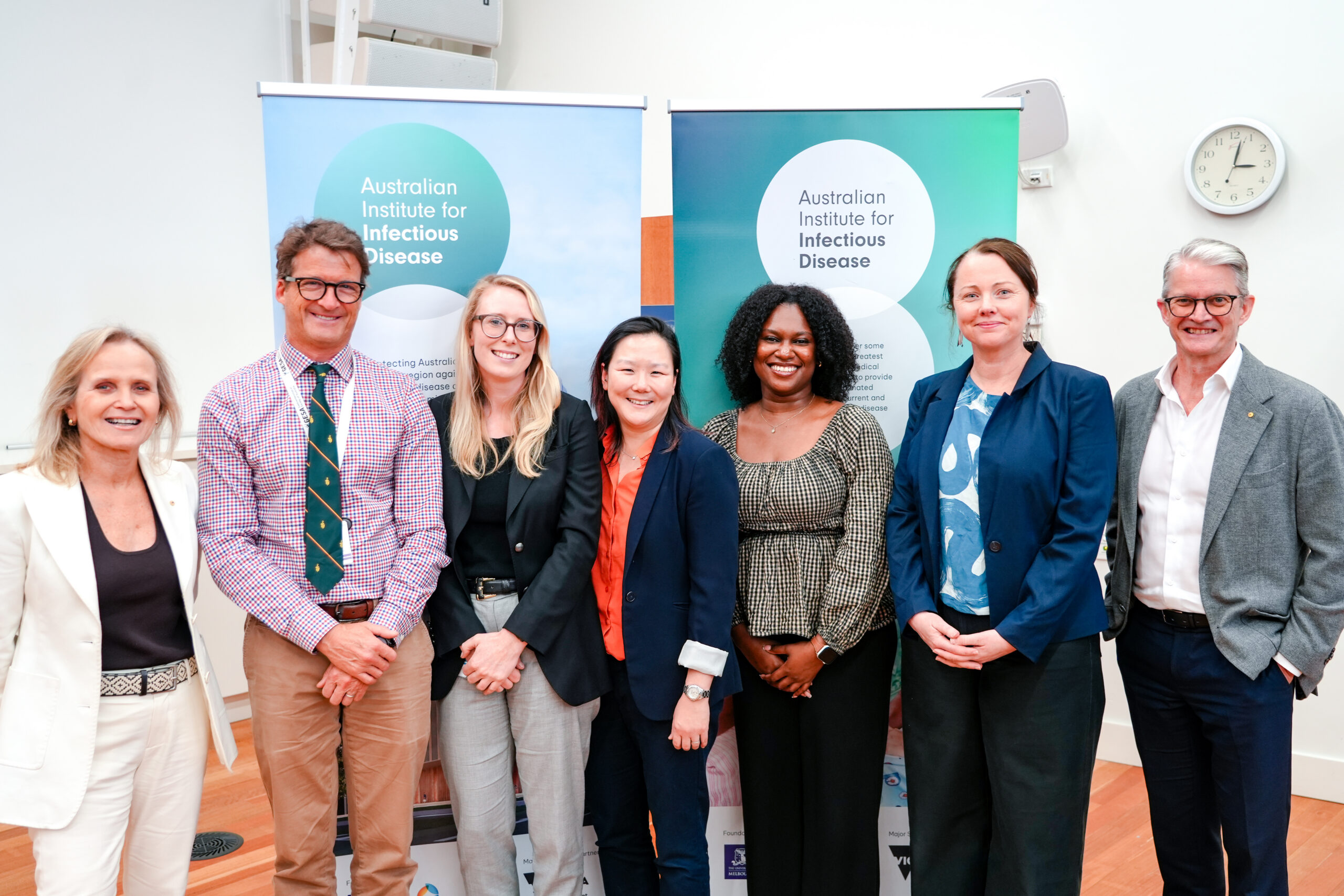
Achieving the elimination of blood-borne viruses requires more than effective treatments and clinical interventions. It demands health systems that are accessible, equitable and responsive to the needs of the communities they serve. This was the focus of the latest AIID in Action seminar hosted at the Doherty Institute on 12 November, bringing together researchers and public health practitioners to explore progress and challenges in addressing blood-borne viruses including hepatitis C, hepatitis B and HIV across Australia and the Pacific.
Professor Alexander Thompson (University of Melbourne) opened the seminar by examining Australia’s progress towards hepatitis C elimination, highlighting the important role of prison-based and community corrections programs in reaching marginalised populations.
“Prisons are really the engine room for Australia’s progress towards elimination of hepatitis C,” Professor Thompson said.
Australia’s universal access to direct-acting antiviral treatments has driven significant progress, with the number of people living with hepatitis C falling by more than 50 per cent over the past decade. However, engaging people who face barriers to traditional healthcare remains a critical challenge.
He highlighted the success of nurse-led outreach, point-of-care testing and peer-supported initiatives in improving access to testing and treatment, while emphasising the need to address the broader social barriers that affect people’s engagement with healthcare.
Dr Storm Holwill (Doherty Institute) explored efforts to eliminate vertical transmission of HIV, hepatitis B and syphilis across the Pacific. Drawing on work in Vanuatu and Fiji, she highlighted the significant challenges posed by geographical isolation, limited antenatal services, stigma and fragmented health systems. While effective prevention and treatment tools exist, their impact depends on ensuring women and families can access appropriate care.
“So really, this is an equity problem. Distance, cost, stigma, siloed programs are all compounding one another,” Dr Holwill said. Her presentation highlighted the importance of strengthening existing health systems, integrating services and building local capacity to ensure interventions are sustainable and accessible.
The seminar also explored the importance of data sovereignty and locally led partnerships in strengthening infectious disease surveillance. Dr Caroline Van Gemert and Aleesha Kalulu (Burnet Institute) presented two case studies demonstrating how partnerships and local ownership can improve public health systems across the Pacific. Their work included an electronic disease notification system implemented in Vanuatu and the development of a regional HIV surveillance framework.
Dr Van Gemert emphasised that the authority and accountability of communities and countries over how their data is collected, accessed and used (known as ‘data sovereignty’) is fundamental to equitable health outcomes. “(The case studies) demonstrate who holds authority over the data shapes who benefits,” she said.
Ms Kalulu highlighted the importance of designing health interventions around local needs and cultural contexts, rather than assuming approaches can be universally applied. Reflecting on the challenges of decentralising healthcare in the Pacific, she noted that “it’s not just a one-size-fits-all” approach.
Across the presentations and subsequent panel discussion, a common message emerged: achieving health equity requires more than making healthcare services available. It means understanding and addressing the practical, cultural and systemic barriers that prevent people from accessing them, while ensuring communities and local health systems are active partners in designing and delivering solutions.
The seminar reinforced the importance of collaboration across research institutions, governments and communities in advancing more equitable and sustainable responses to infectious diseases in Australia and the Pacific.